Crispy Rice Salmon
Crispy rice salmon is a showstopping appetizer that delivers bold flavors and irresistible textures in a single bite. With a base of perfectly seasoned sushi rice, pan-fried to golden crispness, and topped with creamy, spicy, citrus-kissed salmon, this dish combines the elegance of Japanese cuisine with modern fusion flair. Each bite contrasts the satisfying crunch of rice with the refreshing zing of yuzu kosho and the buttery richness of sushi-grade salmon.
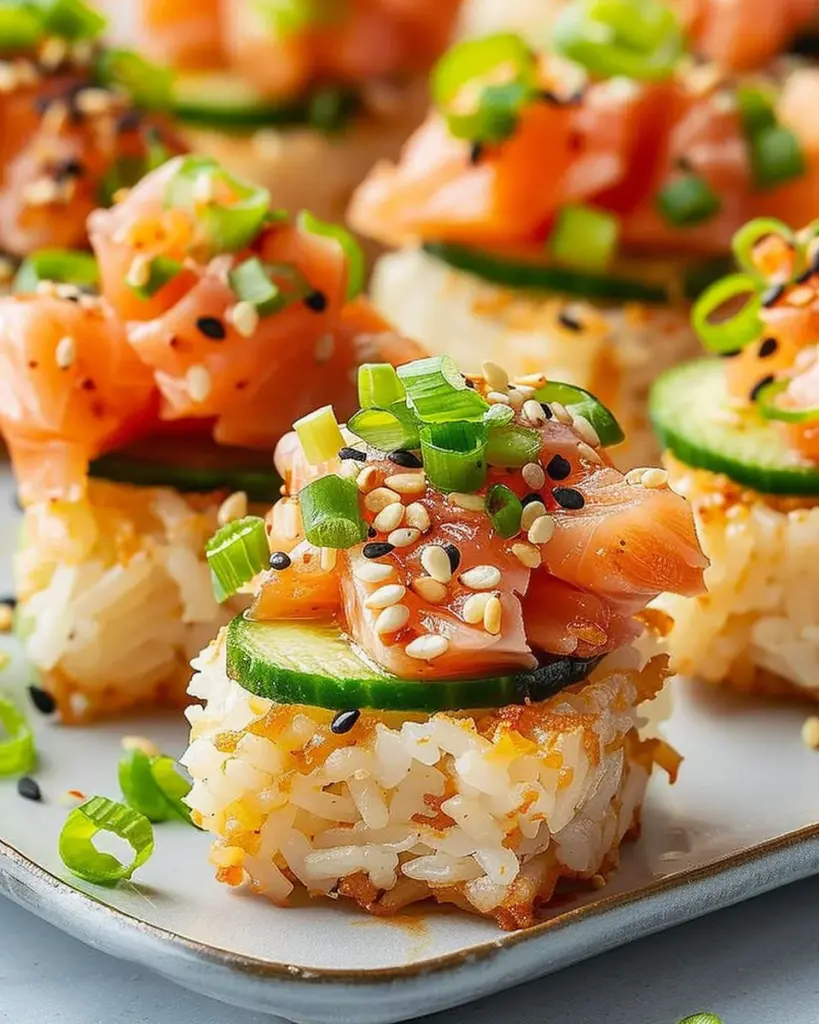
Whether you’re hosting a dinner party or craving a restaurant-quality snack at home, this recipe will not only satisfy your sushi cravings but also wow your guests with minimal effort. Serve it as an appetizer, party snack, or even a stylish side dish—it’s versatile, vibrant, and undeniably delicious.
Why You’ll Love This Recipe
- Crispy rice salmon delivers high-impact flavor with a visually stunning presentation.
- The texture contrast—crispy rice base, silky salmon topping—makes every bite crave-worthy.
- The dish is fully customizable—adjust spice, citrus, or garnish to suit your preferences.
- It’s easy to prepare ahead: make the rice block the night before for quick assembly.
- Perfect for entertaining, date nights, or treating yourself to something extraordinary.
Preparation Phase & Tools to Use
Essential Tools and Equipment
To make crispy rice salmon with optimal ease and texture, gather the following tools:
- Mixing Bowls – For prepping and seasoning rice and salmon.
- Rice Cooker (or heavy saucepan) – Ensures evenly cooked sushi rice.
- Rice Paddle or Spoon – Gentle on rice grains while mixing.
- 8×8 Baking Tray – To mold rice into an even block.
- Plastic Wrap – Lines the tray for easy removal and shaping.
- Medium Skillet – For shallow frying rice pieces.
- Wire Rack + Lined Baking Sheet – Allows excess oil to drain, keeping rice crispy.
- Sharp Knife & Cutting Board – For clean salmon cuts and slicing the rice block.
- Measuring Spoons – Ensures consistent seasoning.
Importance of Each Tool
Each tool serves a vital role in achieving the right balance of structure, flavor, and presentation:
- The rice cooker guarantees even texture, avoiding undercooked or mushy grains.
- The baking tray and plastic wrap help mold and chill the rice block for easy slicing.
- A wire rack ensures fried rice stays crisp, avoiding sogginess caused by plate condensation.
- A sharp knife is essential when cutting both delicate fish and chilled rice blocks.
Preparation Tips
- Rinse the rice thoroughly until the water runs clear. This removes excess starch and prevents a gluey texture.
- Chill the rice block for at least 3 hours. This firms the rice, reducing splatter and ensuring clean cuts.
- Heat the oil properly before frying. Drop in a single rice grain to test—if it sizzles rapidly, it’s ready.
- Avoid overcrowding the pan. Space pieces apart to ensure crispness on all sides.
- Drain rice on a rack, not a plate. This prevents condensation and keeps the rice crispy.
Ingredients
Seasoned Sushi Rice
- 1.5 cups short grain sushi rice (rinsed until water is clear)
- 2 cups water
- 1 teaspoon salt
- 3 tablespoons rice vinegar
- 1 tablespoon granulated sugar
- 1 teaspoon toasted sesame oil
Salmon Mixture
- 1 pound sushi-grade salmon (finely diced)
- 3 tablespoons Kewpie mayonnaise
- 1 teaspoon yuzu kosho
- 1 teaspoon yuzu juice
- 1 tablespoon soy sauce
- 2 teaspoons sesame oil
Garnishes
- 2 cucumbers, halved and thinly sliced
- 2 tablespoons toasted sesame seeds
- 4 stalks green onion, chopped
Step-by-Step Directions
1. Prepare the Sushi Rice
- Rinse the rice 4–5 times until the water is clear.
- Cook the rice with 2 cups of water using a rice cooker or stove method.
- While rice cooks, combine salt, rice vinegar, sugar, and toasted sesame oil in a small bowl until dissolved.
- Once rice is done, gently fold in the vinegar mixture using a rice paddle.
2. Mold and Chill the Rice Block
- Line an 8×8 tray with plastic wrap.
- Press warm seasoned rice into a ½-inch thick layer. Avoid over-packing.
- Wrap tightly and refrigerate for at least 3 hours or overnight.
3. Slice the Rice
- Once chilled, remove the rice block and slice into bite-sized rectangles.
- Pat each piece dry with a paper towel to remove surface moisture.
4. Pan-Fry the Rice
- Heat ¼–½ cup vegetable oil in a skillet over medium-high heat.
- Once hot (test with a single grain of rice), carefully add rice pieces.
- Fry each side for ~2 minutes or until golden brown.
- Transfer to a wire rack to cool and drain.
5. Prepare the Salmon Topping
- Finely dice sushi-grade salmon.
- In a bowl, combine salmon, Kewpie mayo, yuzu kosho, yuzu juice, soy sauce, and sesame oil.
- Mix thoroughly and refrigerate until ready to use.
6. Assemble the Crispy Rice Salmon Bites
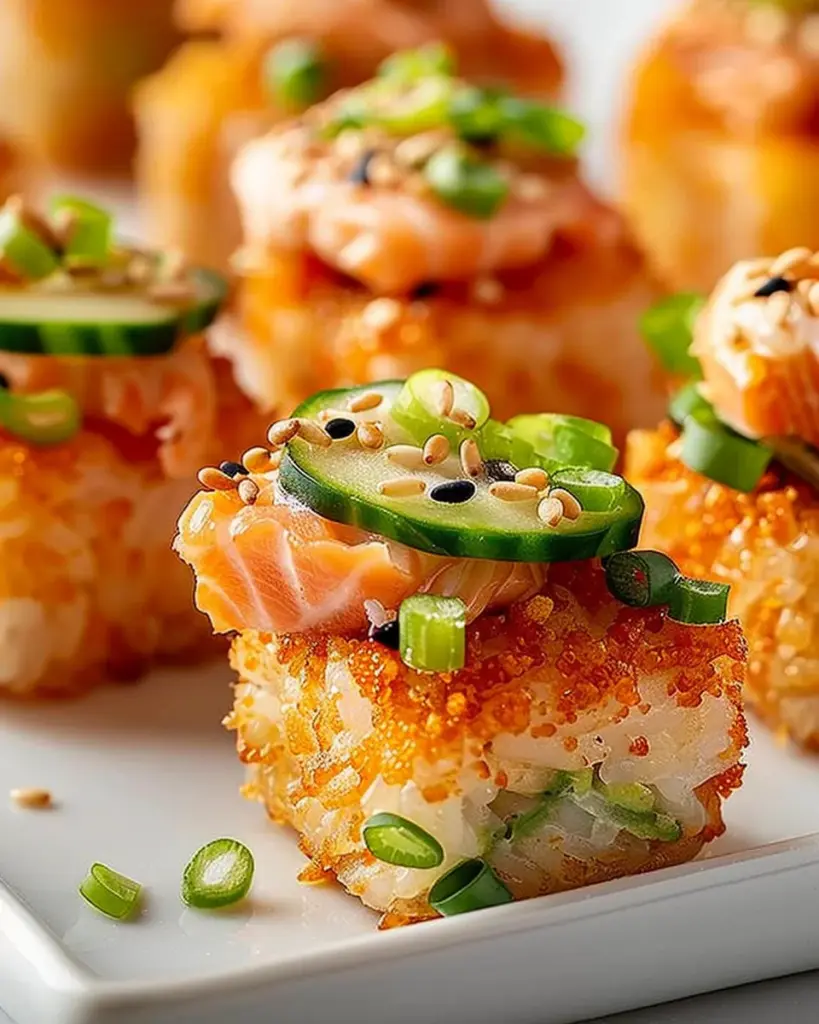
- Top each rice piece with sliced cucumber.
- Add 1–2 tablespoons of salmon mixture.
- Garnish with sesame seeds and chopped green onions.
- Serve immediately for the best texture.
Serving Suggestions
Crispy rice salmon is designed to be the star of your appetizer table. Its crispy, golden rice base and creamy, spicy salmon topping offer a striking contrast that looks as good as it tastes. Here are ways to make the most of its presentation and flavor.
How to Serve
- Arrange bites on a rectangular platter or wooden board for visual appeal.
- Place each piece on a thin cucumber slice or small square of nori for added texture.
- Drizzle with a touch of soy glaze or ponzu for extra umami.
- Add a few drops of sriracha mayo or wasabi cream for color and spice.
- Serve warm rice and cold salmon for the best flavor contrast.
- Include pickled ginger, lime wedges, or jalapeño slices on the side for variety.
Hosting Tips
- Assemble the rice and salmon separately ahead of time; combine just before serving.
- Keep salmon mixture chilled until the last moment to preserve freshness.
- Use a tiered serving tray if serving a crowd—it looks elegant and saves space.
- Provide small appetizer forks or cocktail picks for easy handling.
Beverage Pairings
- Crisp white wines: Sauvignon Blanc or dry Riesling
- Sparkling sake or prosecco
- Light Japanese beers: Asahi, Sapporo
- Yuzu-based cocktails or citrus-infused sparkling water
Crispy rice salmon shines as a part of any sushi night, party tray, or elegant dinner. It’s equally suited for casual evenings or special occasions.
Common Mistakes to Avoid & How to Perfect the Recipe
Creating flawless crispy rice salmon bites is all about technique and timing. Avoid these common mistakes to ensure every batch turns out restaurant-worthy.
Mistake 1: Not Rinsing the Rice
Problem: Sticky, gluey texture
Fix: Rinse rice 4–5 times until water is completely clear. This removes excess starch and results in grains that stick without becoming mushy.
Mistake 2: Not Chilling the Rice Block
Problem: Rice falls apart during slicing or frying
Fix: Chill the rice block for at least 3 hours, ideally overnight. This firms the structure, making it easier to cut and fry.
Mistake 3: Overcrowding the Pan
Problem: Uneven cooking or soggy rice
Fix: Fry in batches with space between each piece. This allows steam to escape and ensures even crisping.
Mistake 4: Oil Too Cool or Too Hot
Problem: Rice absorbs oil or burns
Fix: Heat oil to medium-high and test with a single rice grain—it should sizzle on contact. Adjust heat as needed between batches.
Mistake 5: Using the Wrong Type of Rice
Problem: Rice doesn’t hold together or fry properly
Fix: Use only short-grain sushi rice. Long-grain varieties won’t produce the same cohesive texture.
Mistake 6: Topping Rice Too Early
Problem: Rice loses crispiness
Fix: Only top the crispy rice when ready to serve. The salmon mixture can make the rice soggy if it sits too long.
Mistake 7: Using Non-Sushi-Grade Salmon
Problem: Risk of foodborne illness
Fix: Always purchase sushi-grade fish from a reputable source. Alternatively, freeze the salmon at proper temps to kill parasites before use.
Mistake 8: Draining on a Plate
Problem: Rice gets soggy
Fix: Always place fried rice pieces on a wire rack over a lined baking sheet. This keeps air circulating and the bottom crispy.
Side Dish Recommendations
Elevate your serving experience by pairing crispy rice salmon with side dishes that complement its flavor and texture. Here are eight curated pairings that match the bold, bright, and umami-rich profile of the dish.
Miso Ginger Seaweed Salad
A light, refreshing counterpoint to the rich salmon and fried rice. The umami of miso and the slight crunch of seaweed add depth without overpowering the main bite.
- Mix soaked wakame with shredded carrots, sesame seeds, and a miso-ginger vinaigrette.
- Serve chilled alongside your rice bites for a sushi bar-style experience.
Edamame with Sea Salt & Lime
Simple and satisfying. Steamed edamame sprinkled with flaky sea salt and a zest of lime adds a clean, citrusy contrast that echoes the yuzu in the salmon topping.
- Serve in small bowls for guests to snack on between bites.
Pickled Cucumber & Daikon Ribbons
Sharp, tangy, and refreshing. These quick-pickled vegetables cleanse the palate and balance the creaminess of the salmon mixture.
- Use a vegetable peeler to slice thin ribbons.
- Toss with rice vinegar, sugar, and a pinch of salt.
Wasabi Mashed Avocado Toast Points
Creamy avocado with a hint of heat adds richness and textural contrast. Spread on toasted baguette or wonton chips to serve alongside or beneath salmon bites.
- Mix mashed avocado with wasabi paste, lemon juice, and a pinch of salt.
Sesame-Ginger Soba Noodle Salad
Cold soba noodles dressed in sesame oil, soy sauce, and ginger make a hearty, balanced side.
- Add sliced scallions and toasted sesame seeds for crunch.
Black Sesame Broccoli & Almond Sauté
Earthy and nutty with a satisfying crunch, this side provides a warm vegetable complement.
- Sauté broccoli florets in sesame oil, toss with toasted almonds, and finish with a dash of soy.
Spicy Mango & Jalapeño Salsa with Wonton Chips
Sweet, spicy, and citrusy. This salsa offsets the umami depth of the main dish with a refreshing burst.
- Combine diced mango, jalapeño, cilantro, lime juice, and red onion.
- Serve with baked or fried wonton chips for scooping.
Yuzu-Cashew-Miso Roasted Carrots
Roasted carrots glazed in yuzu juice and miso paste provide a sweet-savory balance.
- Garnish with chopped toasted cashews for added crunch and flavor harmony.
Recipe Tips, Storage and Reheating Instructions
Perfecting crispy rice salmon doesn’t end with the cooking—it also requires smart storage, safe handling, and correct reheating to maintain texture and freshness.
Recipe Tips for Best Results
- Use very fresh, sushi-grade salmon and keep it cold until serving.
- Prepare the rice block ahead of time. Chill for at least 3 hours or overnight to allow clean cuts and prevent crumbling.
- Do not over-handle the rice. Gently mix and press into the tray without mashing the grains.
- Drain fried rice pieces on a wire rack rather than a paper towel or plate to retain their crisp texture.
- Avoid assembling too early. Only top rice with salmon just before serving to prevent sogginess.
- Add garnishes last. This keeps flavors and textures distinct and visually appealing.
Storage Instructions
- Unassembled components: Store fried rice pieces and salmon mixture separately.
- Salmon mixture: Keep in an airtight container in the coldest part of your fridge. Consume within 1–2 days.
- Fried rice pieces: Cool completely before storing in an airtight container. Keep at room temperature for up to 2 hours or refrigerate up to 2 days.
Note: Assembled bites do not store well. The rice loses crispness and absorbs moisture from the toppings.
Reheating Instructions
- Do not microwave. This will make the rice soggy and ruin its texture.
- To re-crisp fried rice pieces: Place them in a preheated oven at 400°F (200°C) for 3–4 minutes on a wire rack or baking tray.
- Salmon mixture: Do not heat. Always serve it cold or at room temperature for best flavor and safety.
- Final assembly: Reheat the rice, let it cool slightly, then top with chilled salmon mixture and garnishes.
Frequently Asked Questions (FAQs)
What does “sushi-grade salmon” mean?
Sushi-grade means the fish has been frozen and handled in a way that makes it safe to eat raw. It is held to higher standards than regular raw fish. Always buy from reputable sources.
Can I substitute other fish?
Yes, you can use sushi-grade ahi tuna, yellowtail, or even cooked shrimp. Always ensure the substitute is safe for raw or lightly prepared consumption.
What kind of rice should I use?
Only use short-grain sushi rice. Long-grain or jasmine rice will not hold together or crisp properly.
Can I make the rice block ahead?
Yes. In fact, it’s recommended. Chill it for at least 3 hours, but preferably overnight for easy slicing and better frying results.
Can I bake instead of fry?
While pan-frying gives the crispiest result, some recipes do bake the rice at high heat or broil it for a slightly lighter version. However, the texture may not be as satisfying.
Why is my rice falling apart when frying?
The rice may not have been packed tightly or chilled long enough. Also, if the oil is not hot enough, the rice can absorb moisture and break apart.
Can I make it less spicy?
Yes. Reduce or omit the yuzu kosho for a milder version. You can also swap it for citrus zest and a pinch of salt for flavor without heat.
How long can the assembled bites sit out?
Try to serve within 15–20 minutes of assembling. The longer they sit, the more moisture softens the rice.
Is this recipe kid-friendly?
Yes, with modifications. Reduce or eliminate the spice and ensure all toppings are fresh and mild. You can use cooked salmon for younger children.
Can I freeze this dish?
You can freeze the rice block before frying (for up to 1 week), but the salmon mixture should never be frozen once mixed. For best results, fry and assemble fresh.