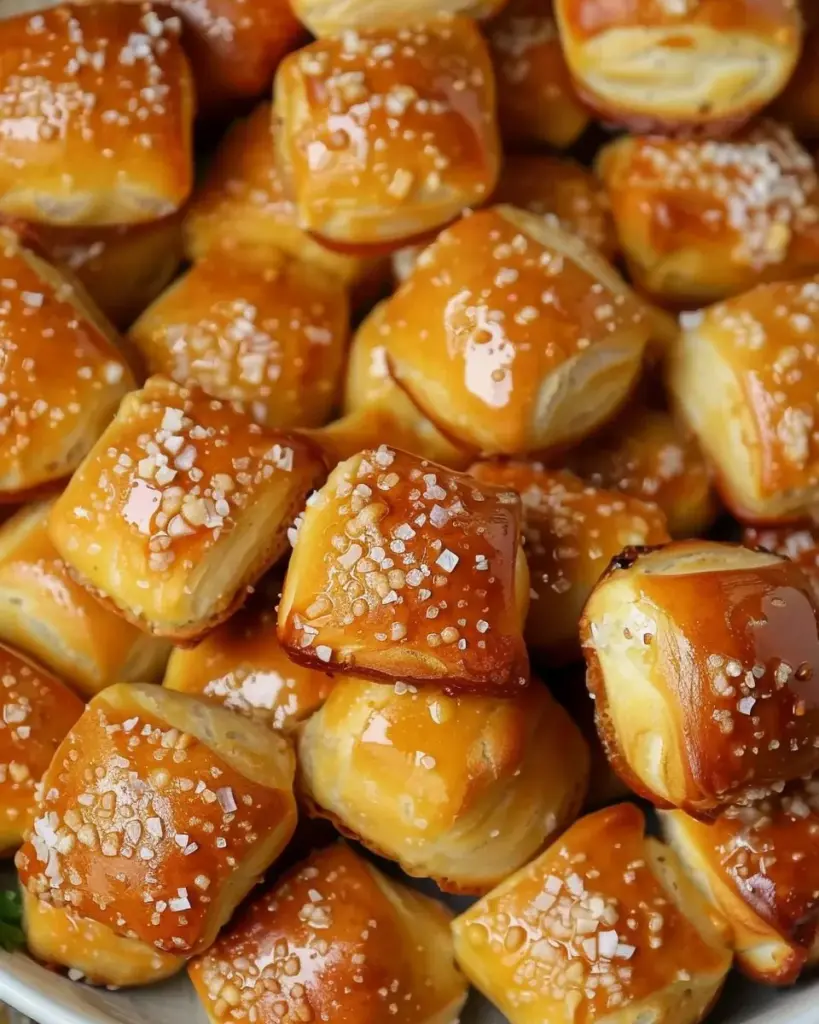
homemade soft pretzel bites
Soft pretzels are the ultimate comfort snack—chewy on the inside, golden-brown and crisp on the outside, and full of warm, yeasty flavor. These bite-sized versions of the classic pretzel are perfect for parties, afternoon cravings, or game-day snacking. What makes them irresistible is their unique texture achieved through a quick boil in a baking soda bath, giving them that signature crust and flavor that everyone loves.
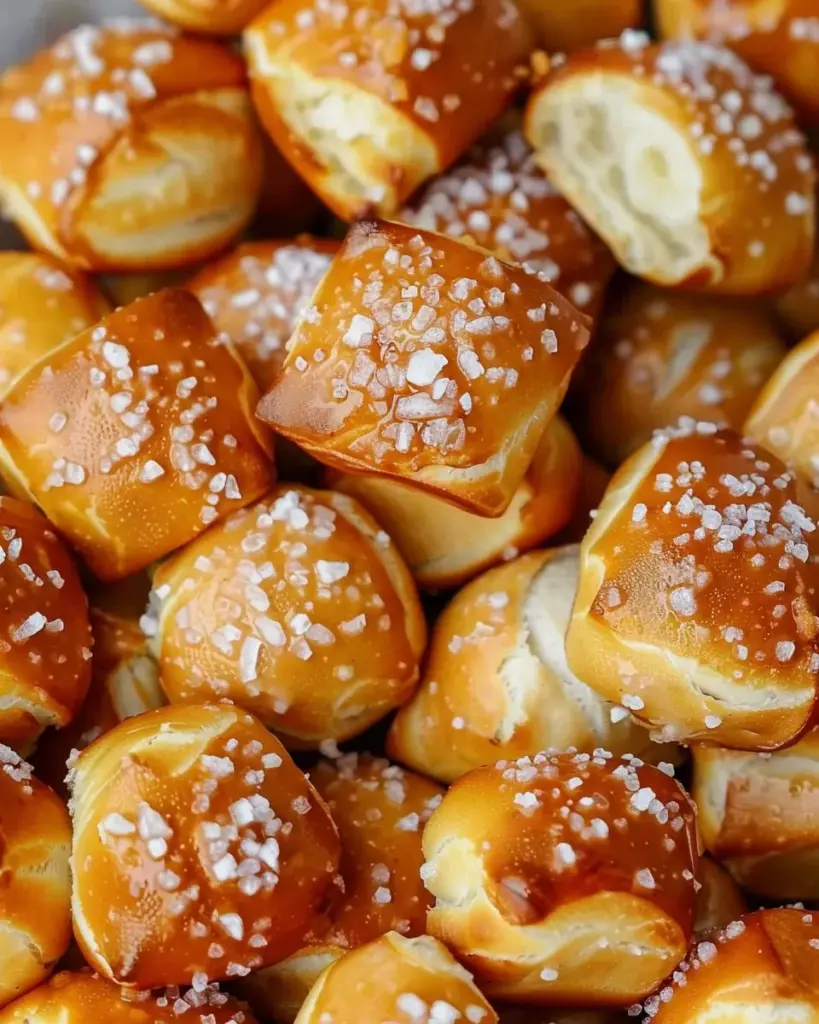
Whether you’re a seasoned home baker or just getting started in the kitchen, this soft pretzels recipe is designed to guide you step-by-step. With simple ingredients and some kneading practice, you’ll be surprised how easy it is to bring bakery-quality pretzels to your table.
Why You’ll Love This Recipe
- Chewy, golden-brown crust from a traditional baking soda bath
- Warm, buttery flavor thanks to enriched dough
- Versatile for sweet or savory dips
- Great for snacking, parties, or kid-friendly lunches
- Beginner-friendly with clear, foolproof directions
Preparation Phase & Tools to Use
Essential Tools and Equipment
To make this recipe with ease, here are the essential kitchen tools you’ll need:
- Stand mixer with dough hook or large mixing bowl
- Measuring cups and spoons for accuracy
- Digital kitchen thermometer (to measure water temperature)
- Dough scraper or bench scraper
- Sharp knife or pizza cutter
- Large pot for boiling
- Slotted spoon or spatula
- Baking sheets
- Silicone baking mats or parchment paper (lightly greased)
- Towel or plastic wrap (for resting dough)
Importance of Each Tool
- Stand mixer: Makes kneading faster and more efficient, especially for enriched doughs.
- Thermometer: Ensures water temperature is yeast-safe (~100°F/38°C).
- Scraper: Helps cleanly divide and shape sticky dough without over-flouring.
- Pot & slotted spoon: Required for the baking soda bath that gives pretzels their signature texture.
- Baking sheets & silicone mats: Provide non-stick surface and even browning.
Preparation Tips
Follow these expert prep tips for best results:
- Use lukewarm water (not hot) to activate yeast without killing it.
- Spoon and level flour to avoid dense dough.
- Melt butter, then cool slightly before mixing in.
- Knead until dough passes the windowpane test—elastic but not sticky.
- Let dough rest before shaping to relax gluten.
- Prepare baking soda bath in advance so there’s no delay post-shaping.
- Sprinkle salt or toppings immediately after boiling for best adhesion.
Ingredients
Dough
- 1 and 1/2 cups (360ml) warm water (approx. 100°F/38°C)
- 2 and 1/4 tsp (7g) instant or active dry yeast (1 standard packet)
- 1 tbsp brown sugar or granulated sugar
- 1 tsp salt
- 1 tbsp (14g) unsalted butter, melted and slightly cooled
- 3 and 3/4 – 4 cups (469-500g) all-purpose flour, spooned & leveled
Topping & Boiling Bath
- 1/2 cup (120g) baking soda
- 9 cups (2,160ml) water
- Coarse salt or coarse sea salt, for sprinkling
Serving
- Spicy cheese sauce or your favorite mustard, for dipping
Step-by-Step Directions
1. Make the Dough
- In a stand mixer bowl, combine warm water, yeast, and sugar. Whisk briefly.
- Cover and let sit for 5 minutes, until the top is foamy.
- Add salt, melted butter, and 3 cups of flour.
- Beat on low speed for 1 minute, then scrape down sides.
- Add remaining 3/4 cup flour and continue mixing until dough pulls away from bowl sides (about 2 minutes).
- If sticky, add up to 1/4 cup extra flour.
2. Knead the Dough
- Switch to the dough hook and knead for 5 minutes (or knead by hand on floured surface).
- Dough should feel soft and elastic.
- Use windowpane test to check gluten development.
3. Rest the Dough
- Cover with a towel or wrap and let rest for 10–30 minutes.
- This allows gluten to relax and makes shaping easier.
4. Preheat Oven and Prepare Baking Sheets
- Preheat oven to 400°F (204°C).
- Line two baking sheets with silicone mats or greased parchment paper.
5. Shape the Dough
- Divide dough into 6 equal pieces using a bench scraper.
- Roll each into 20-inch ropes on a lightly floured surface.
- If ropes shrink back, cover and rest dough 10 minutes.
- Cut ropes into 1.5 to 2 inch pieces for pretzel bites.
6. Prepare Baking Soda Bath
- In a large pot, bring 9 cups water and 1/2 cup baking soda to a rolling boil.
7. Boil the Pretzel Bites
- Drop 8–10 pretzel bites at a time into boiling water for 10–15 seconds.
- Use a slotted spoon to remove and drain.
- Place boiled bites onto prepared baking sheets.
- Immediately sprinkle with coarse salt (or leave plain for sweet versions).
8. Bake
- Bake pretzel bites for 15 minutes or until golden-brown and cooked through.
9. Serve
- Serve warm with your favorite mustard or spicy cheese sauce.
Storage Instructions
- Store covered at room temperature up to 3 days.
- Reheat in microwave for 10–15 seconds or bake at 350°F (177°C) for 5 minutes.
- For long-term storage, freeze baked bites and reheat directly from frozen.
Serving Suggestions
Soft pretzels are endlessly versatile. These chewy, buttery bites can be customized for both savory and sweet flavor profiles, making them ideal for every occasion—from game-day spreads to movie nights and afternoon snacks. Here’s how to serve them in unforgettable ways.
Classic Dipping Options
- Spicy cheese sauce: A bold, melty dip that complements the pretzel’s salty crust.
- Honey mustard: A tangy-sweet classic perfect for kids and adults alike.
- Beer cheese dip: Ideal for parties and game day, pairs beautifully with the pretzel’s chewy bite.
- Garlic butter: Brush freshly baked pretzels with garlic-infused butter for an aromatic twist.
- Creamy ranch: A cool contrast to the warm pretzel texture.
- Cinnamon sugar dip: Mix cream cheese with powdered sugar and cinnamon for a sweet treat.
Presentation Tips
- Serve bites warm on a wooden board or tray with dip bowls.
- For parties, use toothpicks for easy grabbing.
- Make ahead and reheat for last-minute entertaining.
- Offer both salty and sweet versions to cater to all tastes.
Flavor Variations
- Brush with melted butter, then roll in cinnamon sugar for a dessert-style version.
- Add shredded cheddar cheese or parmesan before baking.
- Top with sesame, poppy seeds, or everything bagel seasoning.
- Drizzle with chocolate or caramel sauce for a dessert twist.
Common Mistakes to Avoid & How to Perfect the Recipe
Perfecting homemade soft pretzels requires understanding a few critical techniques. Below are the most common mistakes—and how to avoid them for flawless results.
Mistake 1: Using Water That’s Too Hot
- Problem: Hot water kills yeast, stopping the dough from rising.
- Solution: Use lukewarm water (around 100°F/38°C). A kitchen thermometer is recommended.
Mistake 2: Not Letting the Yeast Foam
- Problem: If you move too quickly, the yeast won’t activate.
- Solution: Wait 5–10 minutes after mixing yeast, water, and sugar. It should look foamy on top.
Mistake 3: Skipping the Baking Soda Bath
- Problem: The signature chewy crust won’t develop.
- Solution: Always boil briefly in the baking soda bath. It’s essential for flavor, color, and texture.
Mistake 4: Boiling Too Long
- Problem: Results in a metallic aftertaste.
- Solution: Limit boil time to 10–15 seconds per batch.
Mistake 5: Overusing Flour During Shaping
- Problem: Dough becomes too dry, leading to tough pretzels.
- Solution: Lightly flour the surface—use as little as possible.
Mistake 6: Dough Resisting Shape or Shrinking
- Problem: Gluten too tight from kneading.
- Solution: Let dough rest for 10 minutes. Resting relaxes the gluten for easier shaping.
Mistake 7: Crowding the Baking Sheet
- Problem: Leads to uneven baking and pale sides.
- Solution: Leave space between each pretzel bite to ensure even browning.
Mistake 8: Not Preheating the Oven
- Problem: Uneven texture, pale crust.
- Solution: Preheat fully to 400°F (204°C) before baking.
Mistake 9: Adding Toppings Too Late
- Problem: Salt won’t stick to the dough.
- Solution: Sprinkle toppings immediately after removing from the baking soda bath.
Mistake 10: Inadequate Kneading
- Problem: Dense, heavy pretzels.
- Solution: Knead until dough passes the windowpane test—stretch without tearing.
Mistake 11: Poor Storage and Reheating
- Problem: Pretzels become stale or soggy.
- Solution: Store in an airtight container at room temp. Reheat at 350°F for 5 minutes to re-crisp.
Side Dish Recommendations
Elevate your soft pretzel bites with delicious side dishes that add variety and enhance the experience. Below are eight complementary side dishes.
1. Beer Cheese Dip
A rich, creamy dip made with sharp cheddar and lager. Perfect for dipping warm pretzels. Add cayenne or paprika for extra flavor.
2. Honey Mustard Sauce
This sweet and tangy blend of honey and mustard creates a smooth, crowd-pleasing dip. Use whole grain mustard for texture.
3. Spicy Jalapeño-Cheddar Fondue
Made with melted cheese and diced jalapeños. Ideal for those who love heat and bold flavors.
4. Spinach Artichoke Dip
Creamy, cheesy, and slightly tangy—this classic dip works beautifully with the salty pretzel crust.
5. Currywurst Bratwurst
Sliced bratwurst in tomato curry sauce—a savory, German-inspired side that complements soft pretzels with mustard.
6. Cinnamon Apple Compote
For sweet pretzel variations, this warm compote adds comforting seasonal flavor. Ideal for fall gatherings.
7. Smoked Salmon Spread
Mix cream cheese, dill, and lemon with smoked salmon for an upscale appetizer pairing.
8. Pickle Dill Cream Sauce
A tangy, herbed dip that cuts through the buttery pretzel bite. Made with Greek yogurt, chopped dill pickles, and fresh herbs.
Recipe Tips, Storage, and Reheating Instructions
Perfecting your soft pretzels recipe comes down to consistent technique and smart storage. These tips will help you get the most out of every batch.
Expert Tips for Success
- Rest the dough if it resists stretching
Gluten tightens during kneading. If shaping is difficult, cover and rest for 10 minutes. - Measure flour properly
Always spoon and level your flour to avoid dense dough. - Use silicone baking mats
They promote even browning and prevent sticking better than parchment. - Cool butter slightly before mixing in
Hot butter can kill yeast. Wait until it’s warm, not hot. - Add toppings immediately after boiling
Salt or seeds stick best when the dough is still moist. - Avoid over-boiling
A 10–15 second boil is plenty. Longer times add a metallic taste. - Try flavor variations
Add grated cheese, cinnamon sugar, sesame seeds, or garlic butter for extra flavor. - Use the windowpane test
Stretch a small piece of dough—if it forms a thin, translucent membrane, it’s ready.
Storage Instructions
Keep leftover soft pretzel bites fresh and delicious with these methods.
- Room temperature: Store in an airtight container up to 3 days.
- Refrigeration: Not necessary and may dry out the texture.
- Freezing: Cool completely. Freeze in a single layer, then transfer to a freezer bag. Keeps up to 2 months.
Reheating Instructions
- Oven method: Preheat to 350°F (177°C). Bake for 5 minutes until re-crisped.
- Microwave method: Heat in 10-second intervals. Wrap in a damp paper towel for soft texture.
- From frozen: Bake at 350°F for 8–10 minutes without thawing.
Frequently Asked Questions (FAQs)
Here are the most commonly asked questions about making soft pretzels at home.
Can I use whole wheat flour instead of all-purpose?
Yes, but replace only 50% for best texture. Whole wheat can make the dough denser.
Do I have to boil the pretzels?
Yes. The baking soda bath gives pretzels their signature chewy crust and golden color.
What if I don’t have a stand mixer?
You can knead the dough by hand. It takes about 10 minutes of firm kneading on a floured surface.
How do I know if my dough is kneaded enough?
Use the windowpane test. Stretch the dough gently—if it forms a thin sheet without tearing, it’s ready.
Can I make pretzels ahead of time?
Yes. You can boil the bites, then refrigerate for up to 24 hours before baking.
How do I store and reheat leftovers?
Store at room temperature in an airtight container for 3 days. Reheat in the oven or microwave as described above.
What toppings work besides coarse salt?
Try cinnamon sugar, sesame seeds, poppy seeds, shredded cheese, or everything bagel seasoning.
Can I shape them into traditional pretzels?
Absolutely. Roll into longer ropes and form into a pretzel shape before boiling.
Why did my pretzels turn out dense?
They were likely under-kneaded or too much flour was used. Stick to spoon-and-level measurements and knead thoroughly.